I wonder what were your thoughts on Lev Nikolayevich Myshkin. Too bad I started reading stuff right before you were gone, honestly, i didn’t even know you could read that kind of stuff. But I keep asking myself what would think about some of those characters. But i get why you liked Dostoevsky, he as very christian, “The Idiot” shows it wide open. Although you tried hard, i was never into it.
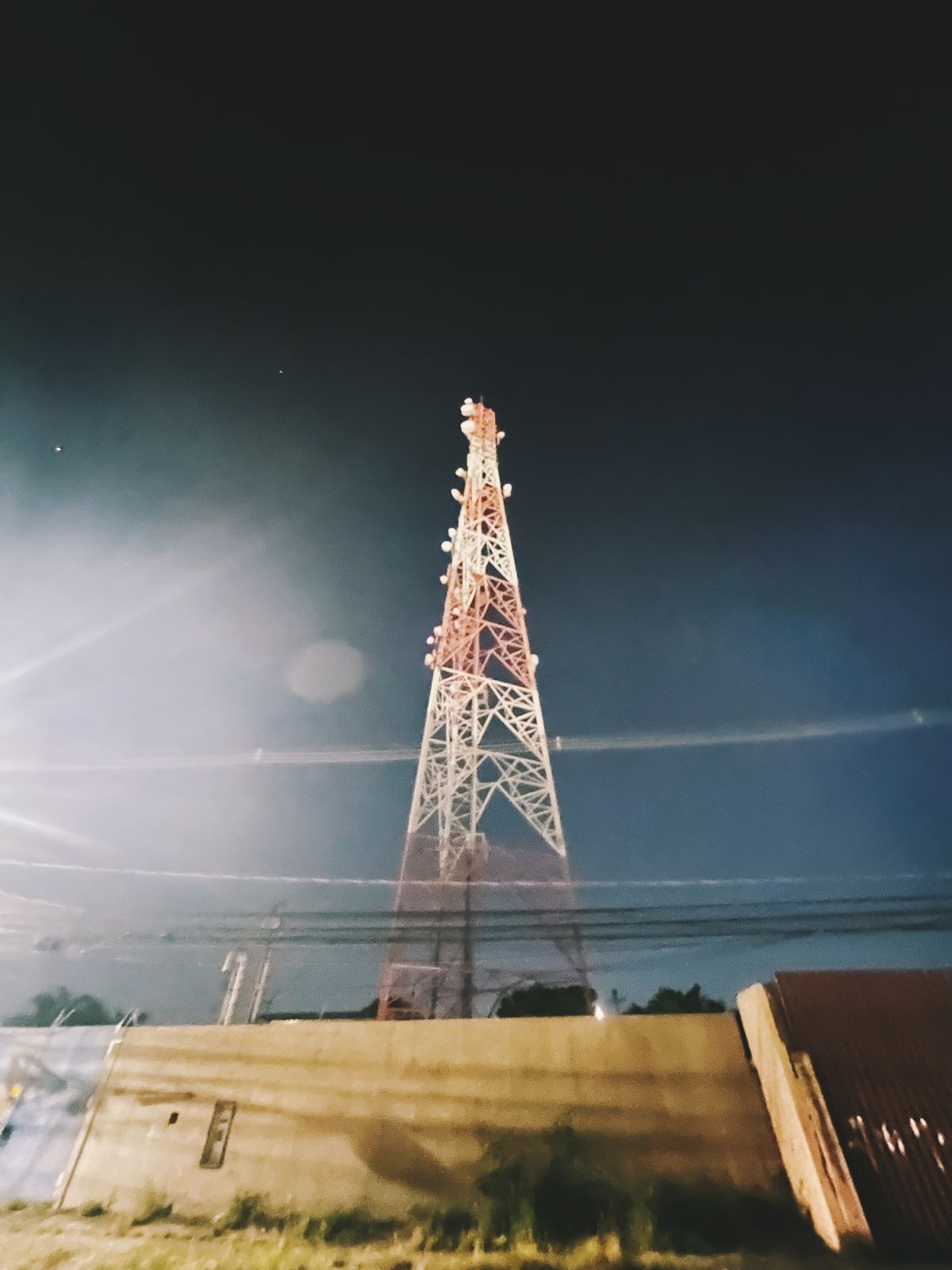
Last night I took a Walk, I remember you liked it. And I took a picture of a tower, the sky was the background. Some people believe they are going to be there, in space. But i feel something else when i look up at night. I wrote it for you.
“There’s a star out there, but also, there’s no life where it shines. We see it shining through an inescapable void, a very unreachable path. Yet, we see it”
To behold a star is to engage in a sensory paradox. We perceive light as a present, tangible warmth, yet the source may have perished aons ago. The “inescapable void” mentioned is not merely a physical distance measured in light-years; it is the ontological gap between the observer and the observed. We inhabit a world of biological urgency, breath, and decay, while the star exists in a realm of “no life.”
The “unreachable path” suggests that our connection to the sublime is purely optical, never physical. We are spectators to a brilliance that does not acknowledge us, shining in a vacuum that would extinguish our very existence.
The star is there, but it is a thing of no one. It is an “it”, a pulse of prehistoric fire that does not know it is shining, just as the cockroach does not know it is a cockroach. It exists in the “inescapable void,” which is not the space between galaxies, but the space between my hand and what my hand touches.
We see it. That is the horror and the grace.
To see the star is to be wounded by a light that has no life in it. It is a sterile beauty, a mineral indifference that mirrors the silence in my own room. I look at it and I want to give it a name, to call it “hope” or “guidance,” but the star refuses my baptism. It remains “the unreachable path.” It is a light that does not warm; it only reveals the vastness of the dark that I inhabit.
And yet, my eyes intercept it. In this intersection, between the dead light and my living, trembling sight, a third thing is born. It is not the star, and it is not me. It is the “instante-já”. It is the moment where I accept that the void is not empty, but full of an absence that shines.
I am the life that watches the “no life.” I am the one who gives the void a witness. To see the star is to accept the mysterious life of those who will one day die, standing before the eternal life of that which was never born.
You have become my star, brother.
 Black Holes Whispering in Tongues